Rent First, Renovate Smarter: What Living Together Before Buying Will Teach You About Your Future Home
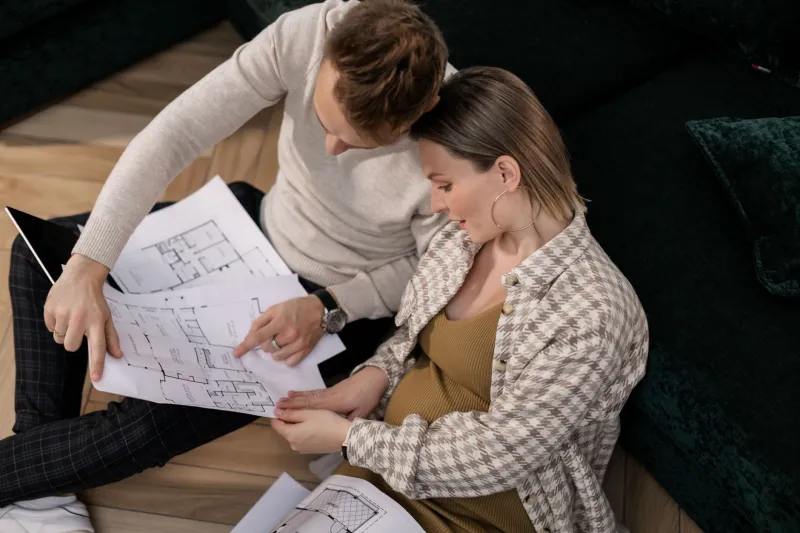
There's a version of the newlywed story that goes like this: you get married, you buy a house, you renovate it into something beautiful, and you live happily ever after. It's a great story. It's also, for a lot of couples, a recipe for expensive mistakes.
The truth is that most people don't fully know how they live as a couple until they've actually done it for a while. And when you don't know how you live, you end up renovating for a version of yourself that doesn't quite exist yet.
Renting together first — even for just twelve months — can change everything about how you approach that eventual renovation. Here's why.
You Don't Know Your Habits Until You Watch Them
You know yourself. You think you know your partner. But cohabitation has a way of surfacing patterns neither of you saw coming.
Maybe you assumed you'd cook big meals together every night, but it turns out Tuesday through Thursday you're both exhausted and ordering DoorDash. Maybe you thought you needed a dedicated home office, but you actually prefer working from the kitchen table. Maybe your partner, who swore they were a light sleeper, turns out to need a room that gets zero morning sun.
None of this is a problem — it's just data. And a rental year is the safest, cheapest place to collect it.
"I always tell couples to treat their first rental like a research project," says interior designer and home planning consultant Dana Mercer, based in Nashville. "You're not just living there — you're studying how you live. That information is worth more than any mood board."
The Spaces You Think You Want vs. The Spaces You Actually Use
One of the most common renovation regrets Dana hears from clients? Spending heavily on a room they barely use.
A formal dining room that sounded essential during the planning phase sits empty most of the year. A massive master bathroom feels luxurious on paper but adds $30,000 to the renovation budget for a space that mostly functions as a place to brush your teeth.
A rental year forces you to live inside real square footage and figure out what you actually gravitate toward. Do you hang out in the kitchen or the living room? Do you use the second bedroom as a guest room or a dumping ground? Is a dedicated laundry room a genuine priority, or would you be fine with a closet setup?
These aren't questions you can answer in the abstract. You need lived experience.
What to Document During Your Rental Year
If you're going to treat your rental as a renovation research phase, be intentional about it. Keep a running note on your phone — or go old school with a shared journal — and track the following:
Space usage patterns. Which rooms do you spend the most time in? Which ones feel too big, too small, or just awkward?
Storage reality check. Are you constantly running out of storage, or do you have room to spare? Where does clutter naturally accumulate?
Natural light and temperature. Which direction does your most-used room face? Do you run hot or cold as a household? This informs everything from window placement to HVAC priorities.
Noise and privacy needs. Does your partner need quiet to work? Do you need separation between the living space and the bedroom to actually decompress?
Kitchen functionality. How do you actually cook? What's missing from your current setup that drives you crazy every week?
Guest frequency. How often do people actually stay over? Is a dedicated guest room realistic, or is a pull-out sofa enough?
Outdoor space usage. If you have a patio or yard, do you use it? Or does it mostly exist in theory?
By the end of twelve months, you'll have a remarkably clear picture of what your ideal home actually looks like — not the Pinterest version, but the real one.
When Renting Reveals Design Disagreements Before They Get Expensive
Here's a bonus that couples don't always anticipate: the rental year is also where design disagreements surface in low-stakes ways.
Marcus and Priya from Denver rented a two-bedroom apartment for their first year of marriage before purchasing a home in the suburbs. During that time, they discovered something important: Marcus wanted every room to feel open and airy, while Priya found open floor plans stressful and preferred defined, cozy spaces.
"If we had bought a house with a huge open-concept layout right away, Marcus would have loved it and I would have been miserable," Priya says. "We figured that out in a rental, and when we started looking at homes to buy, we knew exactly what kind of floor plan actually worked for both of us."
That clarity saved them from a renovation that might have involved tearing down walls — or adding them.
The Financial Case for Waiting
Beyond the lifestyle data, there's a straightforward financial argument for renting first. Housing markets shift. Your income might change in year one of marriage. You might relocate for work. You might decide the neighborhood you thought you wanted isn't actually where you want to put down roots.
Renting gives you a buffer — time to build savings, strengthen your credit, and get a clearer sense of your long-term plans before committing to a mortgage and a renovation budget simultaneously. Trying to manage both at once, especially in the early months of marriage when you're still figuring out how to share a bank account, is a lot.
Dana Mercer frames it this way: "The couples who come to me after a rental year almost always have a more focused renovation plan. They know their priorities. They've already had the arguments about the kitchen island versus the master bathroom. They're ready to build something that actually works."
A Checklist for Your Rental Research Year
Before you sign a lease on your first home together, commit to using the time intentionally:
- Track which rooms you actually use daily vs. occasionally
- Note every storage frustration (not enough, wrong type, wrong location)
- Pay attention to how natural light affects your mood and energy
- Identify recurring friction points in your shared space
- Discuss what you'd change about the rental if you could — and why
- Note what you'd keep exactly as-is
- Talk through one design decision per month and document where you agree and where you don't
- Research neighborhoods, commutes, and school districts without the pressure of an active purchase
The Renovation You Build After All That Is a Different Animal
Couples who skip the rental phase often renovate reactively — fixing problems they didn't anticipate because they didn't know themselves well enough yet. Couples who take the time to observe, document, and discuss come to the renovation table with a clarity that makes every decision faster, smarter, and more aligned.
Your first home renovation is one of the most exciting things you'll do together. Give it the foundation it deserves — and let your rental year do some of the heavy lifting before the real work begins.