What Your Old Stuff Says About You — and Why Letting Go of It Together Is Kind of a Big Deal
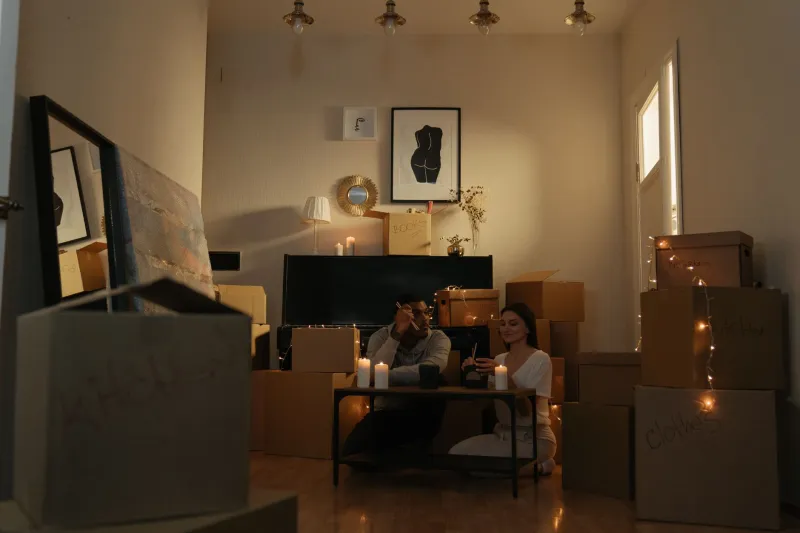
Every couple drags some version of their past life into their first shared home — the futon from your studio apartment, the lamp your grandma left you, the coffee table that survived three roommates. Deciding what stays and what goes isn't just about square footage. It's actually one of the most revealing things you'll do together as a couple.
And yet, most newlyweds treat decluttering like a chore to power through. Box it up, haul it out, move on. What they miss is that buried inside that whole messy process is something genuinely worth paying attention to.
Your stuff carries more weight than you think
Here's the thing about objects: they're never just objects. That beat-up bookshelf from your college dorm? It held your textbooks, sure, but it also held a whole version of you — the late-night study sessions, the independence, the life you built before anyone else was part of the picture.
When you bring that bookshelf into a shared home, you're not just bringing furniture. You're bringing a story. And your partner has their own collection of stories sitting in storage units and moving boxes across town.
This is what some therapists call "emotional archaeology" — the idea that our possessions function like layers of sediment, each one marking a different period of our lives. When couples start digging through that sediment together, they often uncover things about each other they never knew. The framed photo your partner refuses to throw away. The set of dishes that belonged to their dad. The vintage record collection they've hauled through four apartments.
These things matter. How you handle them — together — matters even more.
The argument hiding inside the moving boxes
Let's be honest: this process can get tense. You might look at your partner's collection of mismatched bar stools and think, absolutely not. They might feel the same way about your gallery wall of black-and-white prints. And suddenly a conversation about furniture turns into something that feels weirdly personal.
That's because it is personal.
Most couples report that their first real disagreement about their shared home isn't about paint colors or cabinet hardware — it's about whose stuff makes the cut. And underneath that disagreement is a question neither person is quite saying out loud: Whose life are we building here? Yours, mine, or something new?
The couples who navigate this well aren't necessarily the ones who agree on everything. They're the ones who treat the conversation as a real conversation — not a negotiation to win, but a chance to actually understand each other a little better.
Try this: the three-pile method with a twist
You've probably heard of the classic sort-your-stuff-into-keep, donate, and toss piles. It works fine as a logistics system. But for couples, we'd add a fourth pile: the tell me about this pile.
Anytime either of you picks up an object and feels even a flicker of hesitation — don't just make a unilateral call. Set it aside and talk about it. Not to debate its merit as a piece of furniture, but to actually hear the story behind it.
Maybe the story is short. Maybe it's nothing. But sometimes you'll learn something that shifts how you see your partner entirely. The ugly lamp turns out to be the last thing they have from their childhood bedroom. The weird ceramic bowl was a gift from a mentor who passed away. Suddenly the object isn't ugly or weird anymore — it's a window.
And sometimes the story ends with, "You know what, I think I'm actually ready to let this go." That kind of release — the kind that comes from feeling heard rather than overruled — is a completely different experience.
When inherited furniture gets complicated
Family heirlooms deserve their own category of conversation. In the US, it's incredibly common for couples to inherit furniture from parents or grandparents — a dining table that's been in the family for decades, a dresser that crossed the country in a moving truck three generations ago.
Sometimes these pieces are genuinely beautiful and you're thrilled to have them. Other times, they're not exactly your style, but they carry so much meaning that getting rid of them feels impossible.
If you're in the second camp, consider whether the piece can be reimagined rather than retired. A dated dresser might look completely different with new hardware and a fresh coat of paint. A heavy wooden table might anchor a dining room better than you expect once the right chairs and lighting are around it. Giving an inherited piece a second life inside your new home can be a genuinely meaningful act — honoring where it came from while making it part of where you're going.
If the piece truly doesn't work and you both agree on that, talk about how to honor it in another way. A photograph, a small keepsake, a conversation with the family member who passed it down. These things don't have to disappear — they just don't have to take up space in your living room.
Building a shared identity, one decision at a time
Here's what nobody tells you about merging two households: it's not just a logistical exercise. It's the first real act of building a shared identity as a couple.
Every time you decide together that the vintage record player stays but the worn-out couch goes, you're making a tiny statement about who you are as a unit. Every time you find a compromise — maybe his grandmother's quilt lives in the guest room, maybe her art prints go in the home office — you're practicing the kind of collaborative decision-making that will serve you for decades.
The home you end up with after all of this isn't just a collection of furniture that survived a sorting process. It's a reflection of both of you. The things you chose to keep carry meaning. The things you chose to let go made room for something new.
That's not just interior design. That's the beginning of a life together.
A note on the stuff you buy next
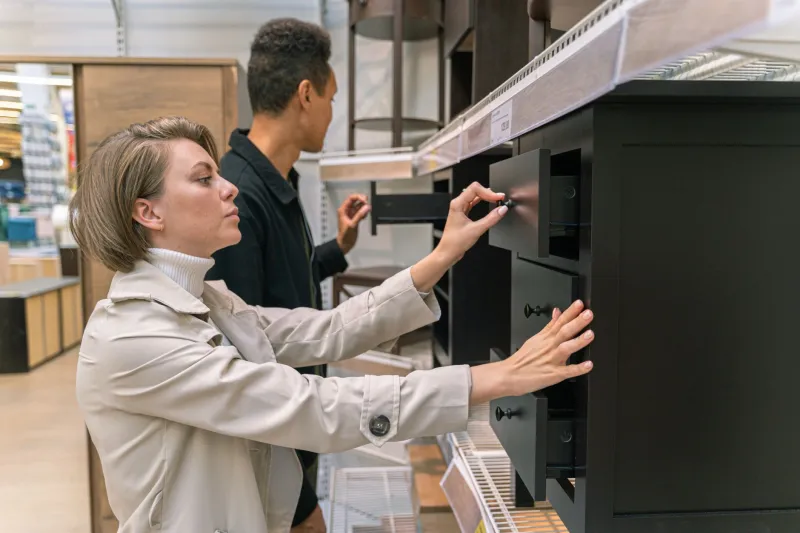
Once you've worked through what you're bringing in from your separate lives, the things you buy together for the first time take on a different kind of significance. The couch you pick out on a Saturday afternoon. The rug you both stand on in the showroom and agree, without much debate, is exactly right.
These become your things — not his, not hers, but yours together. And that distinction, small as it might seem, is part of how a house becomes a home.
So don't rush the process. Sit with the boxes a little longer than feels comfortable. Ask the questions. Tell the stories. Let the decluttering be as much about discovering each other as it is about clearing out the old.
The space you make — physically and emotionally — is exactly where your shared life gets to begin.