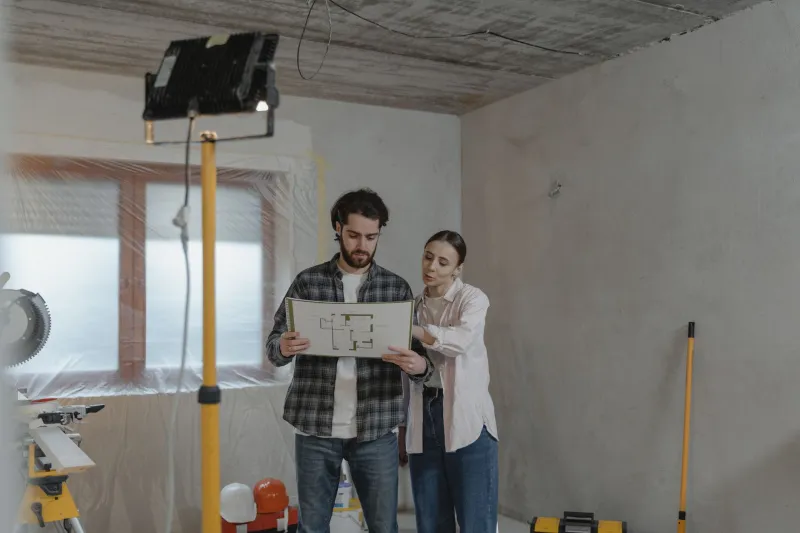
Your First Renovation Blowup Might Be the Best Thing That Ever Happened to Your Marriage

Nobody warns you about this part. You survived engagement parties, seating charts, florist negotiations, and a caterer who almost ghosted you two weeks before the wedding. You figured the hard part was behind you. Then you stood in a tile showroom with your spouse, staring at two very different backsplash samples, and suddenly the air got thick.
Welcome to your first renovation fight. It's uncomfortable. It might feel like a bad omen. It is almost certainly not.
Why Conflict Feels So Alarming in the First Place
There's a reason newlyweds panic when they hit their first real disagreement during a home project. You're still in the early chapters of building a life together, and conflict — especially over something as visible and permanent as your home — can feel like evidence that something's wrong.
But think about what a renovation actually asks of you: shared financial decisions, aesthetic compromises, timeline stress, contractor trust, and the pressure of making choices that will literally surround you every single day. That's a lot to navigate. The idea that two people with different histories, different tastes, and different risk tolerances would glide through all of that without a single tense moment? That's not love. That's avoidance.
The couples who never fight during a renovation aren't necessarily more compatible — they're often just not fully engaging with each other. One person defers, the other decides, and resentment quietly moves in alongside the new furniture.
Real Couples, Real Blowups, Real Breakthroughs
Take Priya and Daniel, who bought their first home in Austin shortly after their wedding. Their renovation fight came early — over the open floor plan they'd both agreed on in theory but couldn't agree on in practice. Daniel wanted to take down a load-bearing wall to open the kitchen to the living area. Priya thought the cost wasn't justified and worried about structural risk. What started as a conversation about square footage turned into a much bigger discussion about how they each thought about money and risk.
"We realized we had completely different frameworks," Priya said. "He's a 'go big now, benefit later' thinker. I'm more 'protect what we have.' Neither of us was wrong. We just hadn't actually talked about it before."
They ended up compromising — a smaller, less structural modification that opened the space without the full cost or complexity. More importantly, they came out of that fight with a shared language for future financial decisions that went way beyond the kitchen.
Or consider Marcus and Leila in Charlotte, whose renovation disagreement was squarely about aesthetics. Marcus wanted a modern, minimalist bedroom — clean lines, neutral palette, almost no decor. Leila envisioned something warmer, layered, more eclectic. Neither would budge, and for about a week, they weren't really talking about it at all.
"The silence was worse than the argument," Leila admitted. "But when we finally sat down and actually explained why we wanted what we wanted, everything shifted."
Marcus's minimalism came from growing up in a chaotic, cluttered household. The clean space wasn't just an aesthetic preference — it was tied to how he felt calm and safe at home. Leila's layered style came from a deep love of collected objects and memories. Once they understood the emotional roots of each other's preferences, the compromise came naturally: a clean, structured base with intentional pockets of warmth and personal meaning.
That bedroom ended up being their favorite room in the house.
What the Fight Is Actually Teaching You
Renovation conflicts have a way of surfacing things that everyday life keeps buried. You can live with someone for years and never have a direct conversation about how they think about spending, risk, or the difference between wants and needs. A renovation puts all of that on the table fast.
Here's what those arguments are often really about:
Money and security. Disagreements about budget almost always have a deeper story. One partner might have grown up with financial instability and feels genuine anxiety about overspending. The other might have been taught that investing in your home is always smart. Neither perspective is irrational — but they need to meet each other.
Control and trust. Sometimes the fight about which contractor to hire is actually about who gets to be the decision-maker. Renovation is a great equalizer — it forces couples to figure out how they divide authority and trust each other's judgment.
Identity and belonging. Your home is an extension of who you are. When your partner dismisses your idea for the living room, it can feel like they're dismissing you. Naming that dynamic out loud is often what breaks the stalemate.
How to Fight Better (So You Both Win)
The goal isn't to avoid conflict during your renovation — it's to fight productively. A few things that actually help:
Give the disagreement a name. Instead of arguing about the tile, say out loud: "I think we're actually disagreeing about the budget, not the tile." Getting specific about the real issue moves things forward faster.
Set a time limit on the pause. It's okay to step away from a heated moment, but agree on when you'll come back to it. "Let's sleep on this and talk tomorrow morning" is healthy. Letting it sit unresolved for a week is not.
Bring in a neutral third party when you're stuck. An interior designer or even a trusted friend with a good eye can break a deadlock without either of you losing face. Sometimes you just need someone outside the marriage to say, "Actually, the warm gray works better in this light" and move on.
Celebrate the compromises. When you land on something you both genuinely like — not just tolerate — acknowledge it. Those moments of real alignment are worth marking.
The Renovation Fight as a Relationship Milestone
Here's a reframe worth sitting with: your first big renovation fight is a rite of passage, not a warning sign. It means you're both invested enough to push back. It means you're building something together that actually matters to you. It means you're in a relationship where both voices count.
The couples who look back on their renovation with the most fondness aren't the ones who had no conflict. They're the ones who came out the other side knowing their partner a little better — knowing how they handle stress, what they're willing to compromise on, and what they'll go to the mat for.
That knowledge doesn't just make your home better. It makes your marriage stronger.
So if you're standing in a showroom right now, tension rising, sample boards in hand — take a breath. You're not failing at marriage. You're doing it.