Two Homes Become One: A Couples' Renovation Playbook for Merging Your Separate Spaces

Meet Danielle and Reuben. She had a two-bedroom condo in Chicago's Lincoln Park, tastefully decorated in a warm, bohemian style — lots of macramé, terracotta tones, and vintage rugs she'd collected over years of weekend antique hunting. He had a sleek three-bedroom townhouse in the suburbs, outfitted in a clean, contemporary style with a lot of gray, glass, and clean lines. When they got engaged, they agreed they'd move into his place — it was bigger and closer to both of their offices. Simple enough, right?
"It was not simple," Danielle laughed when we talked to her. "I felt like I was moving into his house, not our house. And he felt like I was trying to take over with all my stuff. It took us almost a year and a renovation to actually feel like it was both of ours."
If that sounds familiar, you're not alone. Merging two established homes is one of the most underestimated challenges engaged couples face — and it's not just logistical. It's deeply personal. Your home reflects who you are. Combining two of them means negotiating identity, memory, and taste all at once. But with the right approach, it's also one of the most meaningful things you can do together before (or right after) the wedding.
Step One: The Honest Inventory — Before You Move Anything
Before a single box gets packed, both partners need to do a full inventory of what they own. And this isn't just a practical exercise — it's a relationship one. Go through each room of each home and categorize items into three buckets:
- Non-negotiables — pieces you feel genuinely attached to and want in the shared home
- Flexible — things you like but could live without if the right replacement came along
- Ready to release — stuff you've been meaning to donate or sell anyway
Do this independently first. Then compare lists. You'll probably be surprised by how much overlap there is in the "ready to release" category — and how revealing the "non-negotiables" are about what each of you actually values.
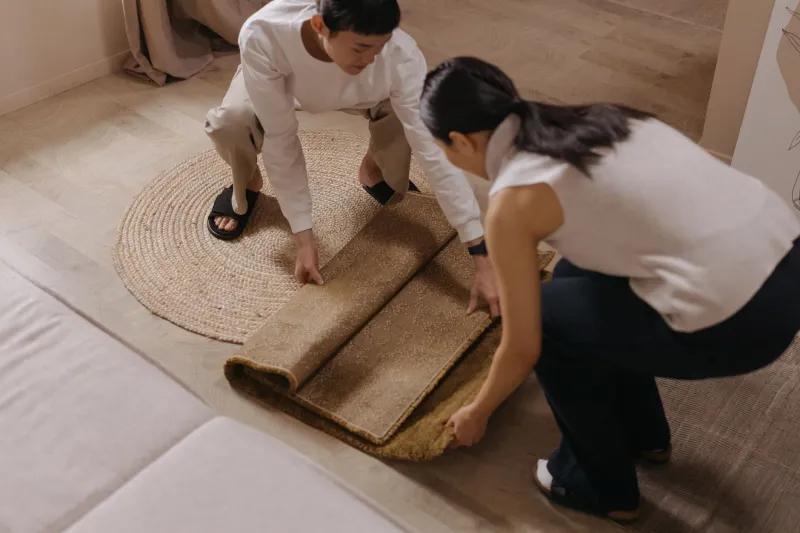
For Danielle and Reuben, this exercise was a turning point. Reuben had assumed Danielle would want to bring everything. She assumed he was attached to all his furniture. In reality, he'd bought most of it from a big-box store and didn't care much about it. And she was more than willing to leave behind a lot of her larger pieces if her vintage rug collection could come along. "We realized we'd both been bracing for a fight that wasn't actually going to happen," Reuben said.
Step Two: Choose a Shared Direction, Not a Compromise
Here's where a lot of couples go wrong: they try to meet in the middle. She keeps her bohemian accents, he keeps his minimalist furniture, and the result is a house that feels like a design argument rather than a home. True compromise in interior design often produces rooms that feel muddled and unintentional.
Instead, try to find a synthesis — a third aesthetic that genuinely incorporates elements of both styles without just splitting the difference. This often means doing some research together. Spend an evening on Pinterest or Houzz building a shared board. Look at real homes, not just products. Notice where your tastes converge.
For Danielle and Reuben, the synthesis turned out to be what designers sometimes call "organic modern" — warm textures and natural materials layered over clean, structured lines. It honored Danielle's love of texture and character while keeping Reuben's preference for order and simplicity. Neither of them had used that term before, but once they saw it labeled and visualized, they both immediately felt like it was them.
Step Three: Decide Which Space You're Renovating — and Why
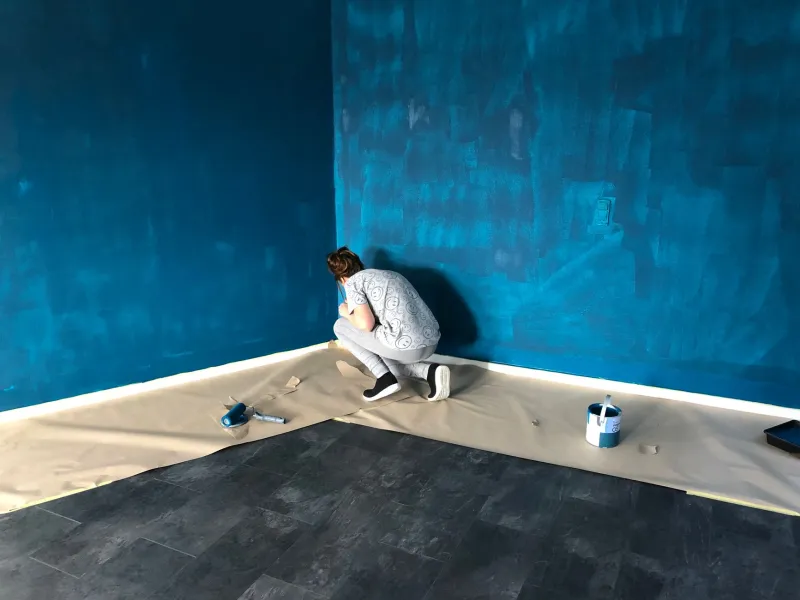
When one partner is moving into the other's existing home, renovation is almost always a good idea. Not because anything is necessarily wrong with the space, but because renovation is how you make it yours together. Even modest updates — a fresh coat of paint, new light fixtures, a different kitchen backsplash — signal that this is no longer his place or her place. It's a new chapter.
Prioritize the rooms where you'll spend the most time together. The bedroom and the main living area are almost always worth the investment. Secondary spaces like guest rooms and home offices can wait.
For couples who are choosing between two properties or starting fresh in a new space, the calculus is a little different — but the principle is the same. Renovation is a tool for establishing shared ownership, not just aesthetics.
A Realistic Renovation Timeline for Merging Couples
Here's a rough timeline that works well for most couples navigating this process:
3-6 months before the wedding (or move-in):
- Complete the honest inventory
- Identify the shared aesthetic direction
- List the spaces that need renovation attention
- Start getting quotes from contractors if needed
2-3 months before:
- Make final decisions on what stays, what goes, and what gets replaced
- Begin selling or donating duplicate and unwanted items (Facebook Marketplace and local consignment shops are great for this)
- Finalize renovation plans and order any long-lead items (tile, custom furniture, etc.)
1 month before:
- Begin any painting or cosmetic renovation work
- Start arranging furniture layouts — even on paper — so you have a plan for moving day
- Set up a shared home budget for ongoing purchases
Move-in month:
- Focus on the main living areas first — bedroom, kitchen, living room
- Give yourself permission for things to be imperfect for a few weeks
- Plan a small "home reveal" dinner with close friends or family — it makes the space feel official
3 months after:
- Revisit secondary spaces with fresh eyes
- Make final decisions on anything you've been unsure about
- Celebrate what you built together
Handling the Emotional Side — Because It's Real
Let's talk about what the design blogs usually skip. Letting go of a home — even if you're excited about what comes next — is a genuine loss. If your partner is moving into your space, it can feel like you're doing them a favor while they silently resent you. If you're the one moving, it can feel like you're erasing yourself to fit into someone else's life.
Both feelings are valid. And renovation, counterintuitively, is one of the best ways to address them. When you physically change a space together — when you pick out the tile, paint the accent wall, hang art you both chose — you're creating shared history. The apartment or house stops being "his" or "hers" and starts being the place where you did that thing with the paint roller and argued about whether the gallery wall was centered.
Danielle put it well: "Once we repainted the living room and put up a few pieces we'd picked out together, I stopped feeling like a guest. It was ours. That sounds simple but it really changed everything."
The One Rule That Changes Everything
If there's a single guiding principle for merging two homes, it's this: make at least one significant decision in every room together, from scratch. Not choosing between his lamp and her lamp. Actually going out — or going online — and picking something new that neither of you owned before.
That one new piece in each room becomes a symbol. It says: we built this space. We didn't just inherit it or tolerate it. We made choices here, as a team.
And that's really what a home is supposed to be, isn't it? Not a backdrop for your life, but evidence of it.